They call it the Abode of Clouds, and for good reason. Meghalaya doesn’t just greet you—it enchants you. With every bend in the road, you find yourself stepping into a scene that looks like it belongs in a fantasy novel: rolling green hills, waterfalls tumbling from the skies, caves waiting to be explored, and villages straight out of a postcard.
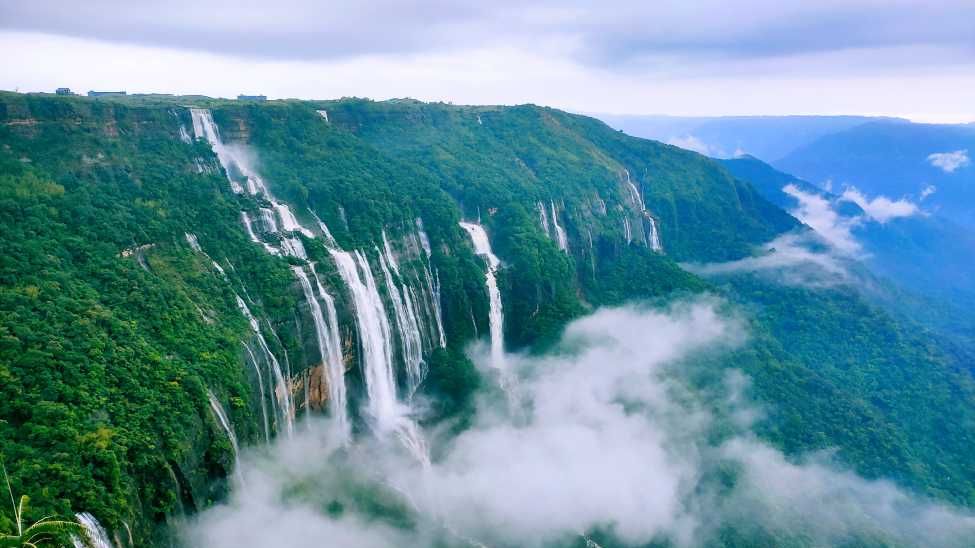
Here’s how my 5-day journey through Meghalaya unfolded:
Day 1: Arrival in Shillong – The Scotland of the East
We landed in Guwahati and began our road trip to Shillong, a drive that sets the tone beautifully. As we climbed higher, the air turned crisp, and pine trees lined the roads like silent guardians.
Highlights:
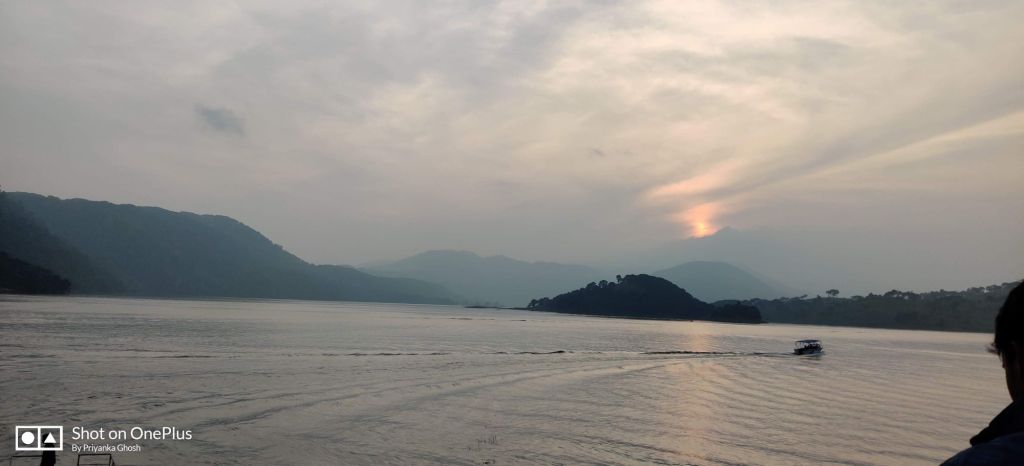
Umiam Lake – Nestled amidst the rolling Khasi hills, this man-made reservoir feels like something straight out of a postcard. The water was still, calm, and glassy—perfectly reflecting the sky and the surrounding pine trees. Locals call it Barapani, meaning “big water,” and you instantly understand why when you see the vastness of it stretching out in every direction.
We reached just before sunset, and the view was unforgettable—hues of gold and orange melting into the lake as the hills stood in silent silhouette.
Police Bazaar – Bustling and vibrant—perfect for grabbing souvenirs or local snacks.
Day 2: Waterfalls and Caves – Sohra (Cherrapunji) Calling
We left early for Cherrapunji, known for being one of the wettest places on Earth. On the way, we were greeted by waterfalls gushing from mountaintops and clouds rolling over the valleys.
Highlights:
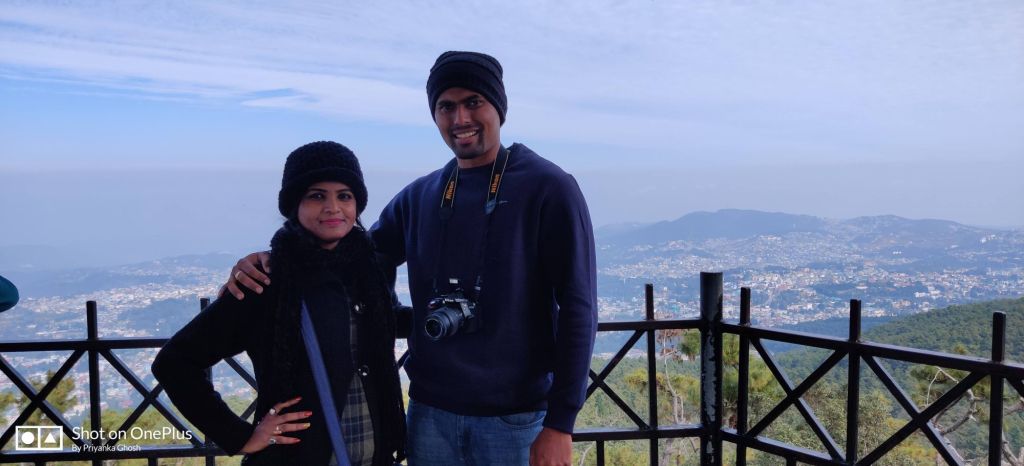
Shillong Peak – At over 6,400 feet above sea level, Shillong Peak offers a view that truly takes your breath away—both literally and metaphorically. From the top, we could see the entire city of Shillong laid out like a miniature painting. Hills rolled into the distance, valleys dipped below us, and if you’re lucky with the weather, the sky clears just enough to catch glimpses of the Bangladesh plains far beyond.
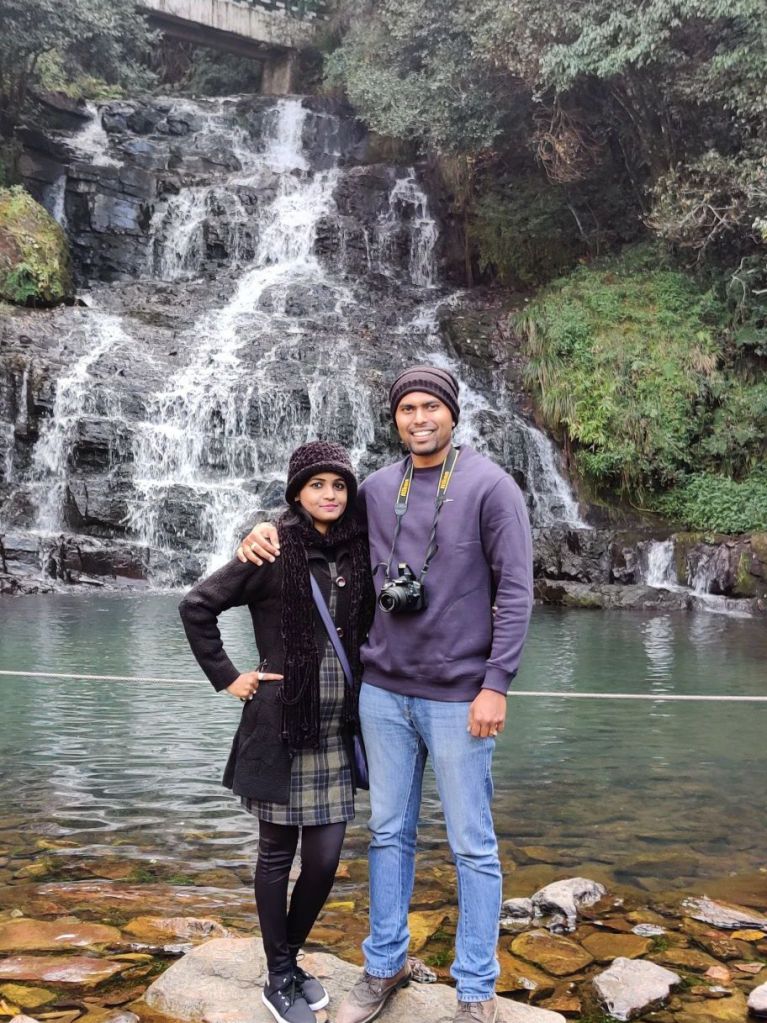
Elephant Falls – Just a short drive from Shillong city lies one of Meghalaya’s most popular yet peaceful spots—Elephant Falls. Originally named by the British after a rock resembling an elephant (which sadly no longer exists), the falls are known in the local Khasi language as Ka Kshaid Lai Pateng Khohsiew, meaning “Three Step Waterfalls.” And true to its name, the waterfall flows in three graceful tiers.
Mawkdok Dympep Valley Viewpoint – As we made our way from Shillong toward Cherrapunji, we pulled over at a seemingly ordinary curve in the road—only to be greeted by an extraordinary sight. Mawkdok Dympep Valley Viewpoint is where the Khasi Hills unfold dramatically into a vast, green amphitheater, wrapped in mist and magic.
Standing on the edge of the viewing platform, I felt like the valley was breathing beneath me—waves of green stretching far into the distance, rising and dipping like nature’s own ocean.
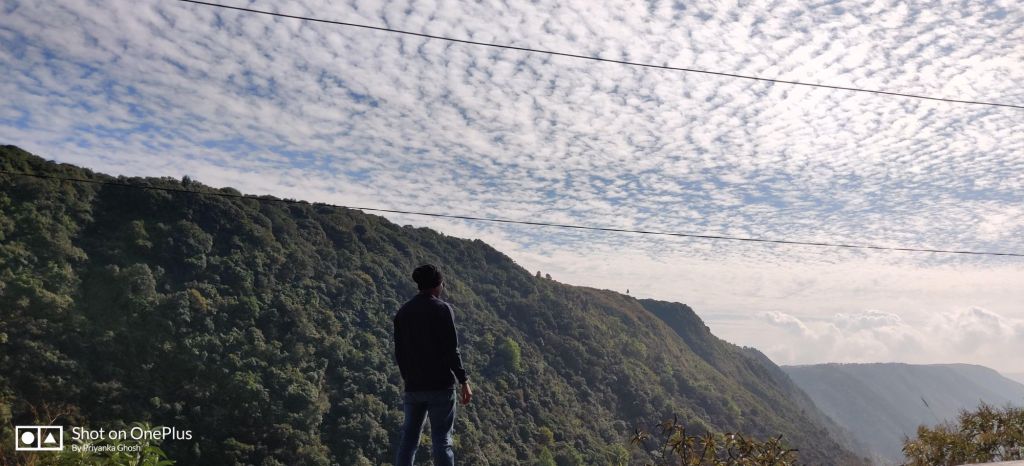
Cherrapunji – Known as one of the wettest places on Earth, Cherrapunji isn’t just about rain — it’s about lush green valleys, thundering waterfalls, living root bridges, and a kind of calm you rarely find anywhere else. Every turn reveals a view that stops you in your tracks — whether it’s clouds drifting through gorges, waterfalls carving paths down cliffs, or endless stretches of rolling hills.
But what truly makes Cherrapunji unforgettable is the way nature and tradition intertwine here. The Khasi people live with the land, not against it — guiding roots to grow into bridges, preserving forests as sacred groves, and celebrating life through quiet resilience.
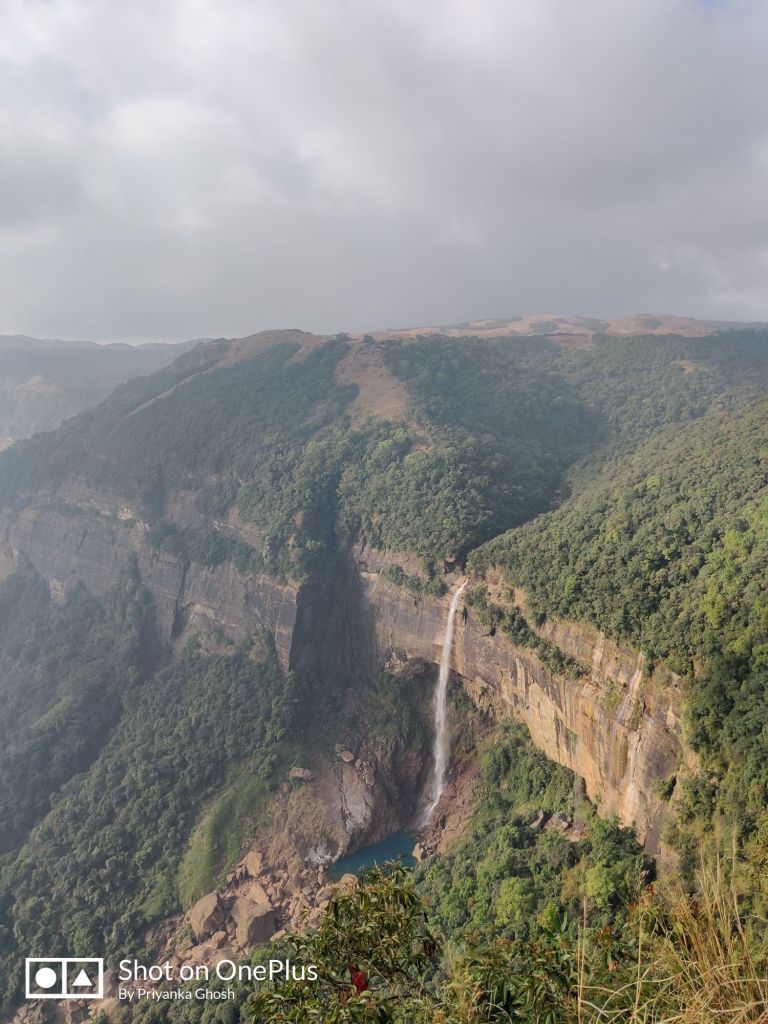
Nohkalikai Falls – Plunging from a height of 1,115 feet, this is the tallest plunge waterfall in India, and standing before it feels like staring into a living painting. Tucked away in the misty hills of Cherrapunji, Nohkalikai greets you with thunderous sound, haunting beauty, and a story that lingers long after you leave.
As we reached the viewpoint, a blanket of clouds began to lift, revealing the white ribbon of water free-falling from the cliffs into a turquoise pool below. Surrounded by layers of green hills, cliffs, and low-hanging mist, it was silent and surreal—almost sacred.
But what adds a strange, poignant depth to this place is the legend behind its name. Noh-ka-likai in Khasi means “the leap of Likai”. According to folklore, a woman named Likai, heartbroken after a personal tragedy, jumped off the cliff—giving this stunning waterfall its name. The legend gives the roaring falls a melancholic soul, making the beauty feel even more profound.
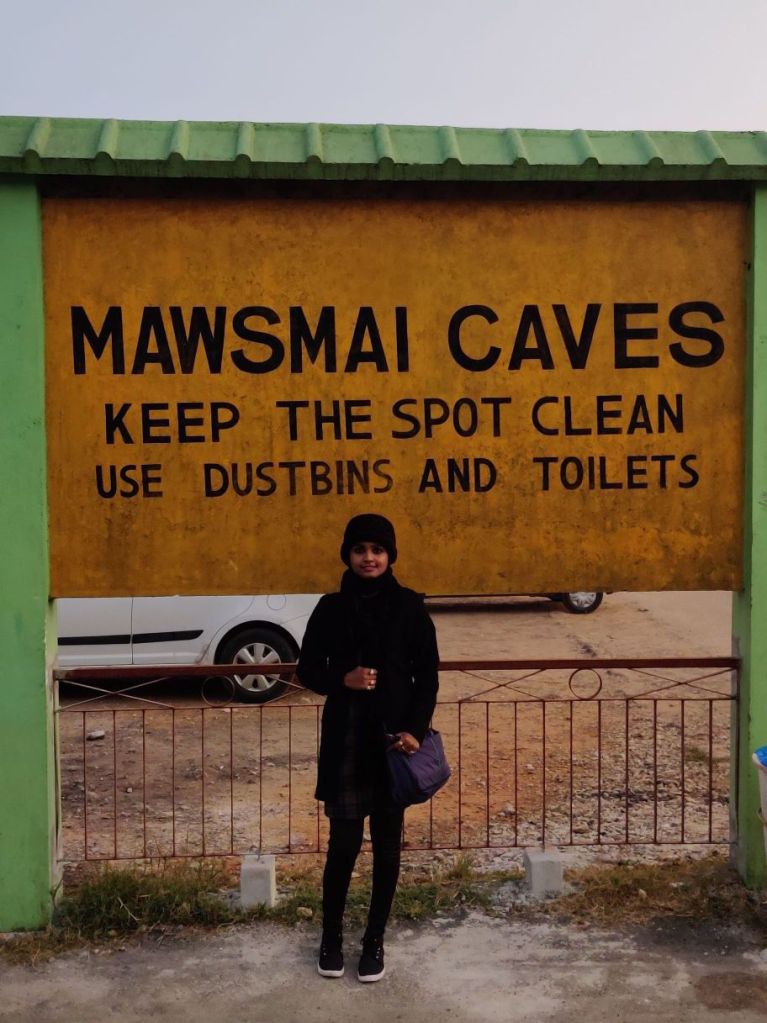
Mawsmai Caves – Tucked amidst the lush hills of Cherrapunji, Mawsmai Caves offer a thrilling peek into Meghalaya’s hidden world — where time, water, and limestone have worked together to carve out something truly magical.
As we stepped inside, the temperature dropped slightly, and the sound of dripping water echoed through the narrow passageways. Stalactites and stalagmites surrounded us like ancient sculptures, formed over thousands of years. Some shimmered with moisture, catching the glow of the faint lights installed along the path.
Day 3: Double Decker Root Bridge Trek – The Heartbeat of Meghalaya
Buried deep within the dense forests of Nongriat village, near Cherrapunji, lies a wonder that feels almost mythical — the Double Decker Living Root Bridge. This isn’t just a place; it’s a pilgrimage for nature lovers and adventurers alike.
To reach it, we began our journey from Tyrna village, descending more than 3,000 stone steps that wind through forest trails, tiny villages, and hanging bridges. The trek is no small feat — your legs will protest, your breath will catch, but your spirit? It will soar.
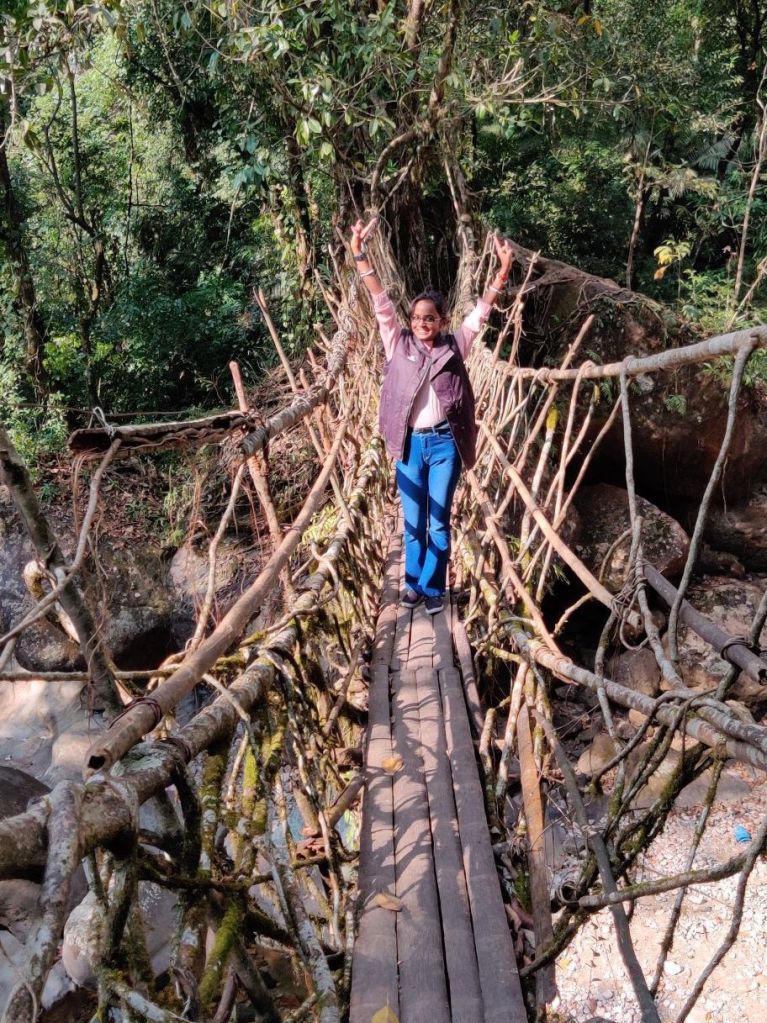
And then, just when you think your knees might give up, you hear it — the rush of a stream and the rustle of trees — and there it is. Two layers of thick, tangled tree roots, living and breathing, woven by the Khasi tribes over generations to form a bridge strong enough to carry humans across.
It’s not built — it’s grown.
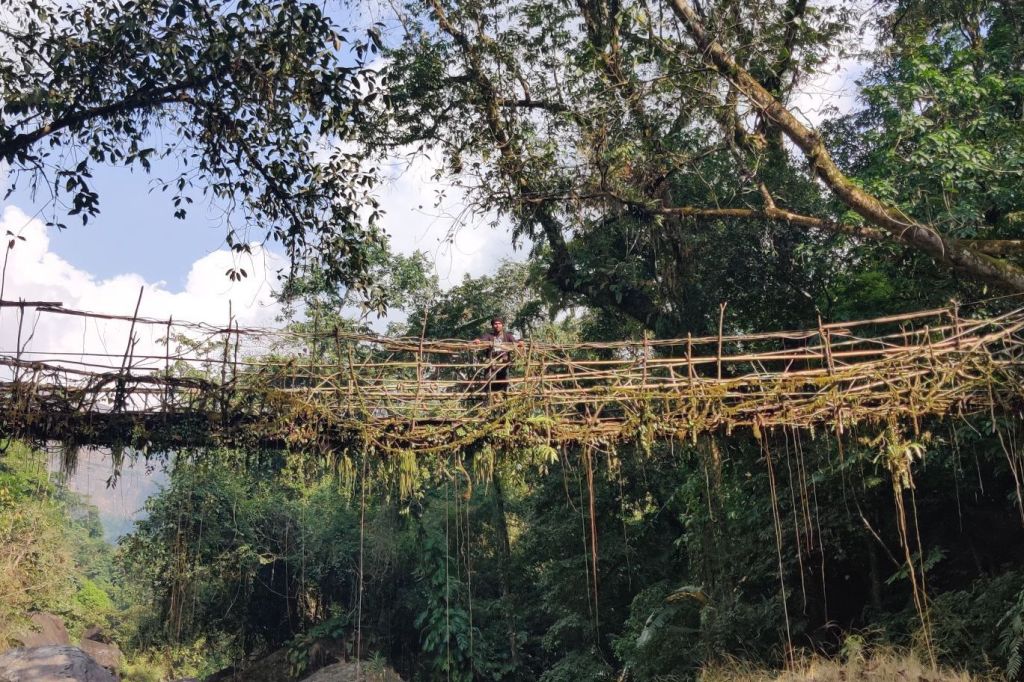
The bridge is alive, rooted in the earth on both sides, suspended over a crystal-clear river that sparkles in the dappled sunlight. Around it, the forest hums with life — butterflies, birds, and a symphony of distant waterfalls. You stand there, in awe, not just of nature, but of the quiet wisdom of the people who work with it instead of against it.
Day 4: Dawki & Mawlynnong – Nature’s Clean Canvas
Highlights:
Mawlynnong – Hidden in the East Khasi Hills near the Bangladesh border lies Mawlynnong, a tiny village that’s earned a big name for itself — often celebrated as Asia’s Cleanest Village. But beyond the fame, what truly makes this place special is its soul.
We arrived on a sunny afternoon and were instantly struck by how spotless and serene everything was. Neat cobbled pathways, bamboo dustbins, flowering gardens, and thatched-roof cottages lined the narrow lanes, all cared for with quiet pride by the villagers. It didn’t feel like a tourist spot — it felt like a community deeply in tune with its surroundings.
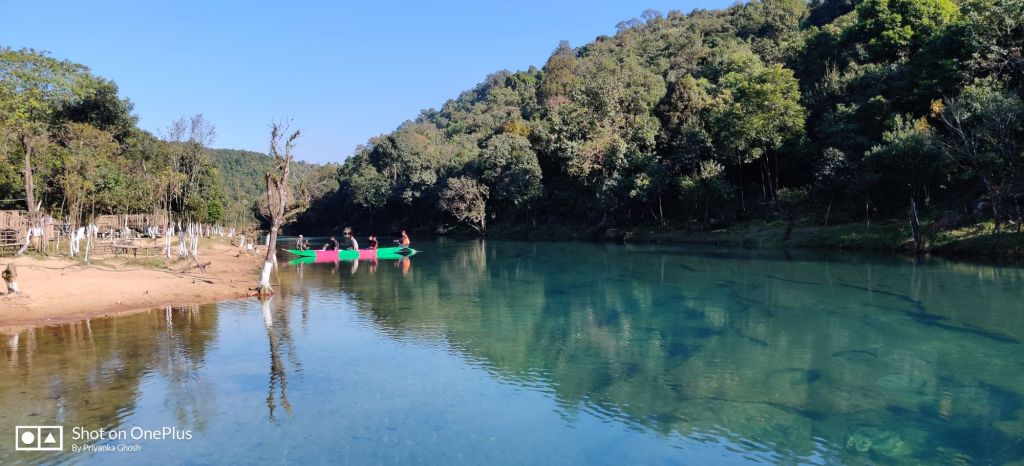
Dawki – Tucked away on the India–Bangladesh border lies a magical little town called Dawki, known for one thing that completely stole my heart — the crystal-clear waters of the Umngot River.
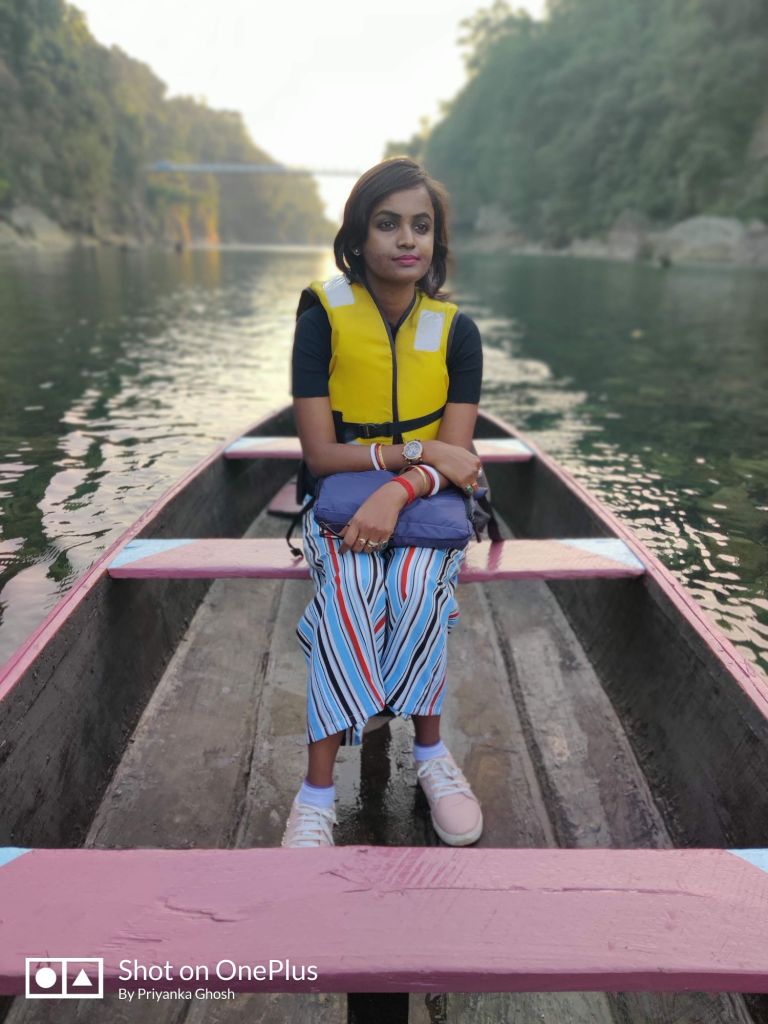
When we arrived, I had heard about how transparent the river is, but seeing it in person was something else. The boats literally look like they’re floating in thin air. You can see every pebble on the riverbed, even in deeper parts, as fish swim lazily below. It’s surreal — like nature forgot to add water and just left a trail of glass.
We hopped on a local boat for a serene ride between towering green cliffs, past hidden caves and waterfalls. The silence, broken only by the gentle splash of oars, made it feel like time had slowed down just for us. If peace had a color, it would be this emerald green.
Day 5: Jowai & Krang Suri Falls – The Hidden Blue Gem of Meghalaya
Highlights:
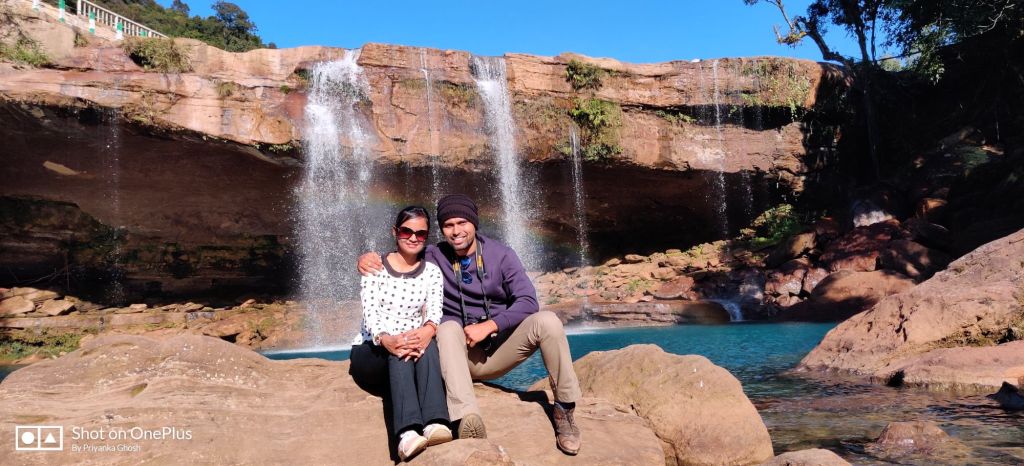
Krang Suri Waterfalls – Tucked away in the West Jaintia Hills, Krang Suri Waterfalls is the kind of place that feels like it belongs on a postcard — or maybe in a dream. With its electric blue waters, forested cliffs, and the soothing roar of falling water, it’s easily one of the most breathtaking waterfalls in Meghalaya.
We reached the falls after a short trek down a stone-paved path surrounded by thick greenery. The moment we caught the first glimpse of that crystal-clear, turquoise pool, it was hard to believe it was real. The sun filtering through the leaves made the water sparkle like liquid glass.
The main cascade spills over a mossy rock face, creating a veil of water that crashes into the pool below — and yes, you can swim in it! Life jackets are available near the entrance, and once you’re in, the coolness of the water paired with the view around you is pure bliss.
Jowai – After days of exploring waterfalls and cloud-kissed cliffs, stepping into Jowai felt like discovering Meghalaya’s soulful side. This quiet town, often overshadowed by Shillong and Cherrapunji, is the cultural heart of the Jaintia people — and if you’re craving a deeper, more authentic slice of Meghalaya, Jowai delivers.
The town itself is laid-back and scenic, perched on a plateau surrounded by hills, rivers, and lakes. The air is fresh, the roads curve gently through pine forests, and there’s a rhythm to life here that’s slow, steady, and peaceful.
Meghalaya isn’t loud. It doesn’t try too hard. It doesn’t need to. Its charm lies in its purity—the untouched forests, the stories told by grandmothers, the bridges grown by patient hands, the rivers that invite silence.
Meghalaya gave me more than I expected — peace, perspective, and people I’ll never forget. And for that, my heart says khublei shibun (thank you very much).

 Roadtrippin' with Sagar